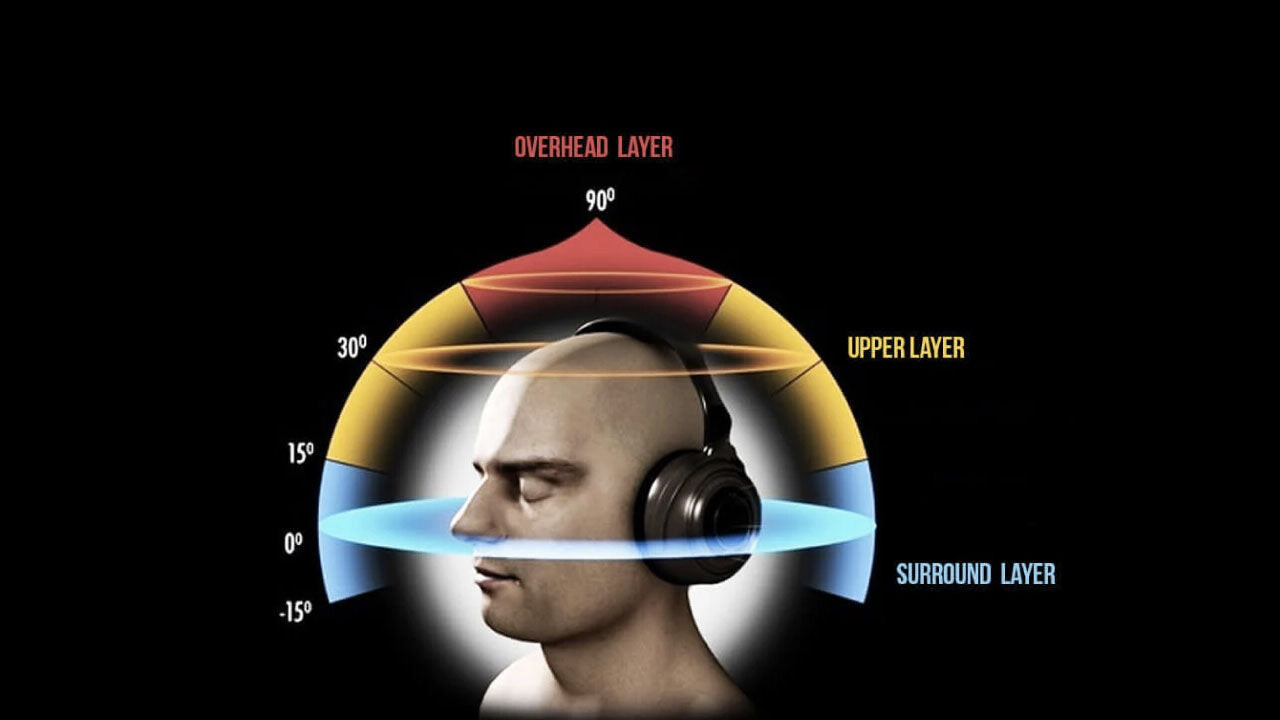
Binaural Sound is often described as the "3D Audio" for headphones. Unlike standard stereo, which simply pans sound between left and right, binaural audio captures the exact way human ears perceive sound in a three-dimensional environment: above, below, behind, and at varying distances.
Here is a comprehensive breakdown of the technology, the science behind it, and why it matters in 2026.
1. How It Works: Mimicking the Human Head
To create binaural audio, engineers use a Dummy Head (a lifelike mannequin) equipped with high-fidelity microphones placed deep inside the ear canals. This setup captures sound exactly as a human would, accounting for the physical influence of the head and the outer ears (pinnae).
When you listen back through headphones, your brain is "tricked" into thinking it is hearing sound in a physical space because the recording includes three critical spatial cues:
$ITD$ (Interaural Time Difference): The slight delay (in milliseconds) it takes for a sound to reach one ear after the other.
$ILD$ (Interaural Level Difference): The difference in volume and frequency caused by the "shadow" of your own head.
$HRTF$ (Head-Related Transfer Function): The complex mathematical transformation of sound waves as they bounce off your shoulders, head, and the folds of your ears.
2. Binaural vs. Other Audio Formats
| Feature | Stereo (Standard) | Surround (5.1 / 7.1) | Binaural Sound |
| Speaker Setup | 2 Speakers / Headphones | 6 to 8 Speakers | Headphones Only |
| Perception | Linear (Left-Right) | Horizontal Plane | Spherical (360°) |
| Mechanism | Volume Panning | Directional Speakers | HRTF Algorithms |
| Realism | Low | High (in theaters) | Ultimate (Personal) |
3. The Science: $HRTF$ Explained
The "secret sauce" of binaural sound is the Head-Related Transfer Function. Mathematically, if $S(f)$ is the source sound at a certain frequency, the sound reaching your eardrum $E(f)$ is:
$$E(f) = S(f) \cdot HRTF(f, \theta, \phi, d)$$
Where:
$\theta$ = Azimuth (horizontal angle)
$\phi$ = Elevation (vertical angle)
$d$ = Distance from the source
In 2026, most modern smartphones and OSs use AI-driven HRTF profiles that can be personalized to your specific ear shape via a quick camera scan.
4. Key Use Cases in 2026
ASMR & Immersive Storytelling: Creating an intimate "whisper in the ear" experience that feels physically present.
Gaming & VR/AR: Essential for competitive gaming (hearing exactly where footsteps are) and creating presence in the Metaverse.
Spatial Music: Platforms like Apple Music and Tidal use binaural rendering (Spatial Audio) to make you feel like you are standing in the middle of a live concert.
Remote Work: Using binaural spatialization in meetings to "place" participants in different parts of a virtual room, reducing "Zoom fatigue."
Note: For binaural sound to work, you must use headphones. If played through speakers, the left and right signals mix in the air before reaching your ears, destroying the phase and time differences that create the 3D effect.